LISTENING TO BOOKS: Recovering the Joy of Reading
PART ONE: ALADDIN’S CAVE
The Back Story: A Rare Side Effect
Blog subscribers may recall my adverse reaction to a beta-blocker medication prescribed by my Stanford cardiologists to sustain my recovery from back-to-back episodes of heart-failure in 2022. A rare (<5%) side-effect had damaged my optic nerves. The symptoms included severely constrained peripheral vision, general blurring and reduced visual acuity. Having detected the cause and swapped medications, my neuro-ophthalmologist projected that these impairments were unlikely to get worse or better. She advised me not to keep hoping for recovery but to focus on adapting to my new disability. With Nancy’s support, I soon identified my core impairments as navigation and reading.
Navigation Hazards
Before my disability, I had shared family driving obligations with my wife, running errands, jumping to doctors’ appointments and taking frequent road trips. Suddenly, Nancy became our sole designated-driver.
Likewise, my pre-impairment fitness routine had included alternating days of vigorous neighborhood walks and swimming laps in our retirement-community pool. Now I couldn’t even safely navigate unfamiliar pedestrian surfaces or dark restaurant interiors without the steadying arm of my seeing-eye spouse.
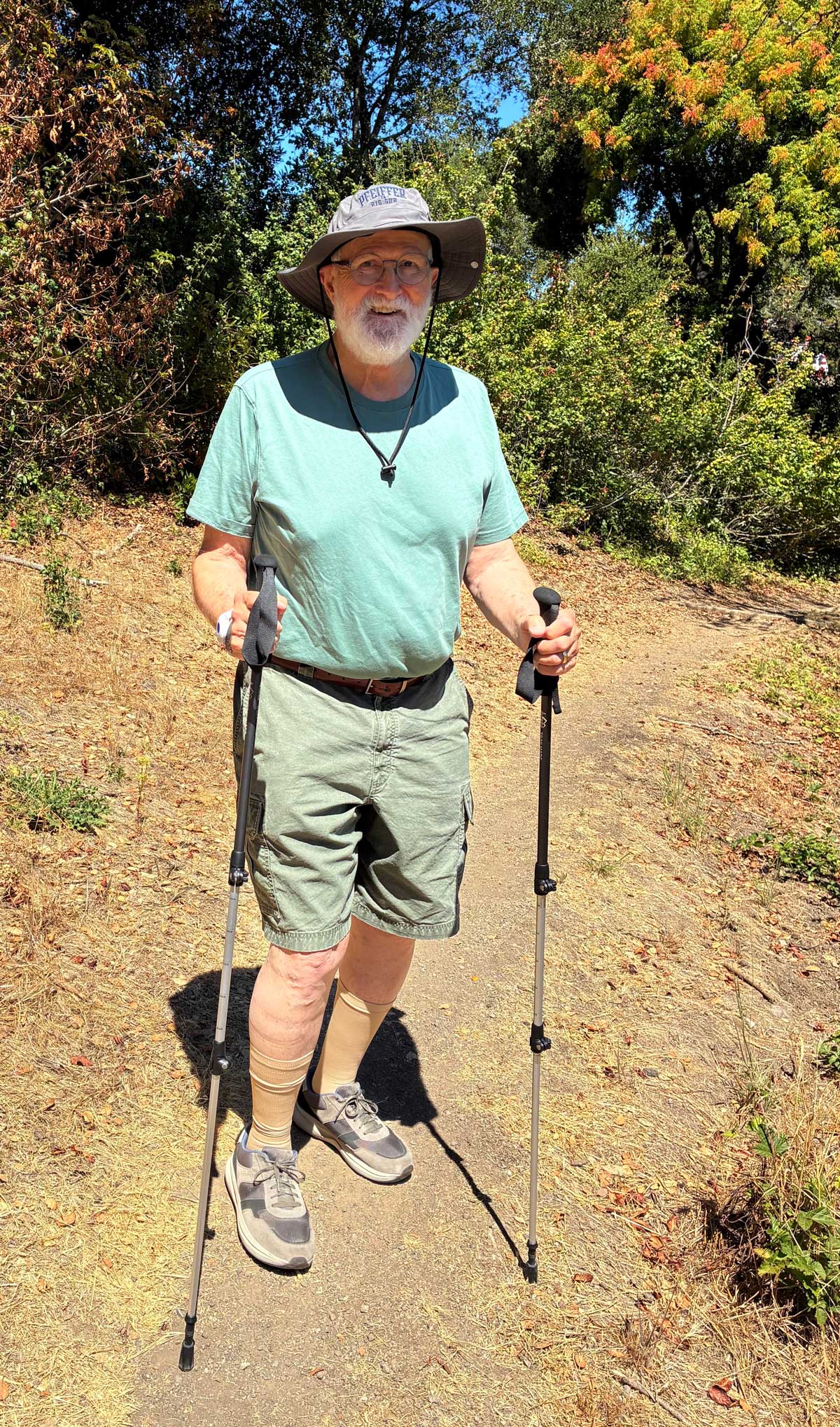 Before long, my new peripheral-vision vulnerability was brought crashing home. In March of 2025 I stepped off a three-inch curb, lost my balance and toppled forward onto a concrete pavement. Eight months of hospitalization, clinical care, rehabilitation, physical therapy and aquacise followed before I regained near-normal mobility. (Today I walk on paved retirement-community paths without mechanical aids; in unfamiliar or uneven terrain, I use a trekking pole. On hiking trails, two.)
Reading Reductions
Despite this generous assistance, I remained markedly less able to read than before. Even with a hand-held magnifier, small print was elusive. In extended sessions, regular print could be fatiguing. Large print seemed to fade in and out. I longed to retrieve the ease and joys of uninhibited reading. At which point, Vista offered one final gift: a referral to, and certification of eligibility for the services of, the Braille and Talking Book Library in Sacramento.
AN AUDIBLE TREASURE TROVE
First Contacts
The initial voice answering my phone call was an automatic recording: “…If your last name begins with Q through T, press ‘5’…”.
Seconds later, I welcomed a more animated response. In my golden years, I’m more comfortable communicating with living humans: “Hello, this is Sheryl. Am I speaking with Russell Sunshine?”
“Yes, this is Russell. Good morning, Sheryl.”
“Mr. Sunshine, I’m your personal Reader Advisor. How can I help you?”
Sesame’s doors were opening wide.
This threshold vignette captures BTBLs exceptional receptivity. Not only did “my” Reader Advisor nimbly match my incoming call to my advance-application identity. Sheryl has also remained with me ever since as my in-house representative and facilitator. No clock-watching bureaucrat, she worked extra hours to send me a packet of requested books on a rush basis so I could enjoy listening to them on vacation in the Sierras.
More extraordinary, when BTBL’s Director, Mike Marlin, learned I was asking questions for my blog post about his organization’s history, structure and operations, he volunteered to answer them personally, by email, and then make himself available for clarifications by phone.
When’s the last time you received a comparably hospitable response from a sizeable institution, public or private, when making a cold call without connections or clout? These folks set a high standard.
Vital Statistics
Here’s what I’ve been learning from the Director and BTBL publicity materials.
The Braille and Talking Book Library is an operating division within the California State Library. It also serves as the Northern California Regional Library for the Library of Congress’s National Library Service for the Blind and Print-disabled. It has a long legacy, tracing back to 1904. Today BTBL serves 48 Northern California counties, sharing state-wide coverage with its Southern (10-county) affiliate.
BTBL’s main activity is lending audio- and braille books to blind and visually impaired clients (“patrons” in library parlance.) It also lends book-playing machines, magazines and videos. Its materials’ formats have evolved over the decades, keeping pace with technological advances. First, phonograph records, then four-track cassette tapes. Now all BTBL data is stored in the cloud in digital master files. A patron can order an audio-book in two alternative forms: in a Digital Book cartridge containing a USB flash memory device on which a copy of the book’s text has been recorded; or as a direct download, via the internet, to the patron’s smartphone or computer. There’s a three-month borrowing time-limit for each cartridge. A cartridge-playing machine can be retained for as long as a patron needs BTBL services. All BTBL materials and services, including round-trip mailing, are provided free-of-charge to its patrons.
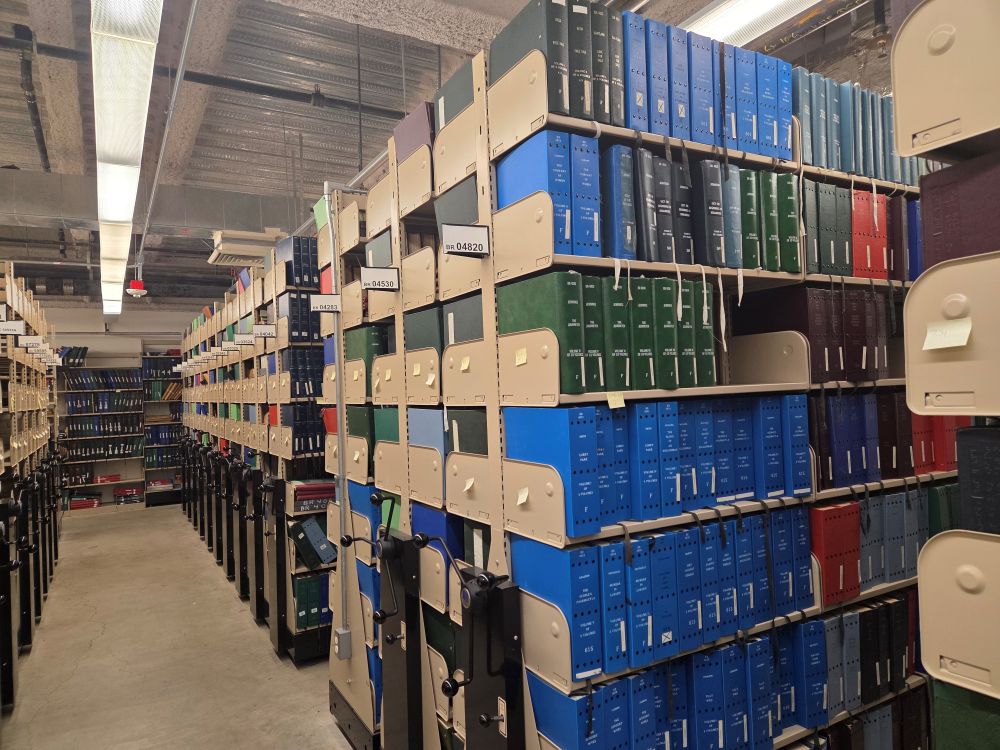 The size of BTBL’s lending collection is impressive: 150,000 audio-book titles, 26,000 braille-book titles and 110 magazine subscriptions. The main sources for new acquisitions are commercial publishers’ donations, professionally produced recordings and network libraries’ contributions. Together these add about 10,000 new titles per year. Acquisition recommendations are welcomed and seriously considered from the National Library Service’s Collection Development Section, BTBL patrons and staff.
BTBL annually serves about 8,000 registered individual patrons, plus another 1,000 through institutional clients (nursing homes, retirement communities, schools, colleges and hospitals.) I was discouraged to learn that, over the past decade, there has been a sharp decline in such specialized libraries’ client base (about 30% cumulatively in California and nationwide.) Director Marlin and his professional counterparts attribute this shrinkage to diverse influences including competition from social media and television, declining literacy and attention spans, and patron deaths. (BTBL’s median patron is 72 years of age but their core demographic ranges from 80 to 90.) In our conversations, I observed that Google estimates California’s blind and low-vision population at 845,000 residents. The Director was intensely aware of this unmet need.
This is a compact shop. All BTBL lending activity (plus limited in-house audio studio production) is conducted by a staff of 16 full-time paid professionals plus 35 volunteers.
I asked Mr. Marlin how BTBL could sustain such an exceptionally patron-friendly culture. He modestly attributed it to the librarian profession’s traditional service ethic. “The most trusted occupation after firefighters!” (In candor, I’ve known librarians around the world who resembled Cerberus more than Samaritans. I suspect his team’s inspiration may be found closer to home.)
This program is financed by federal and state grants to the California State Library totaling d $2.5 million in 2025. $17,000 in supplementary donations was received from the independent, non-profit, California State Library Foundation. Budget constraints are severe. Published BTBL newsletters make clear that cutbacks by the current presidential administration have been onerous, with some relief provided by Congress and the California Governor.
A Trial Run
As a non-tech-savvy senior, I wanted to try using the BTBL’s borrowing system hands-on. So I dedicated the month of June to a sample reading experiment. The results were almost uniformly encouraging.
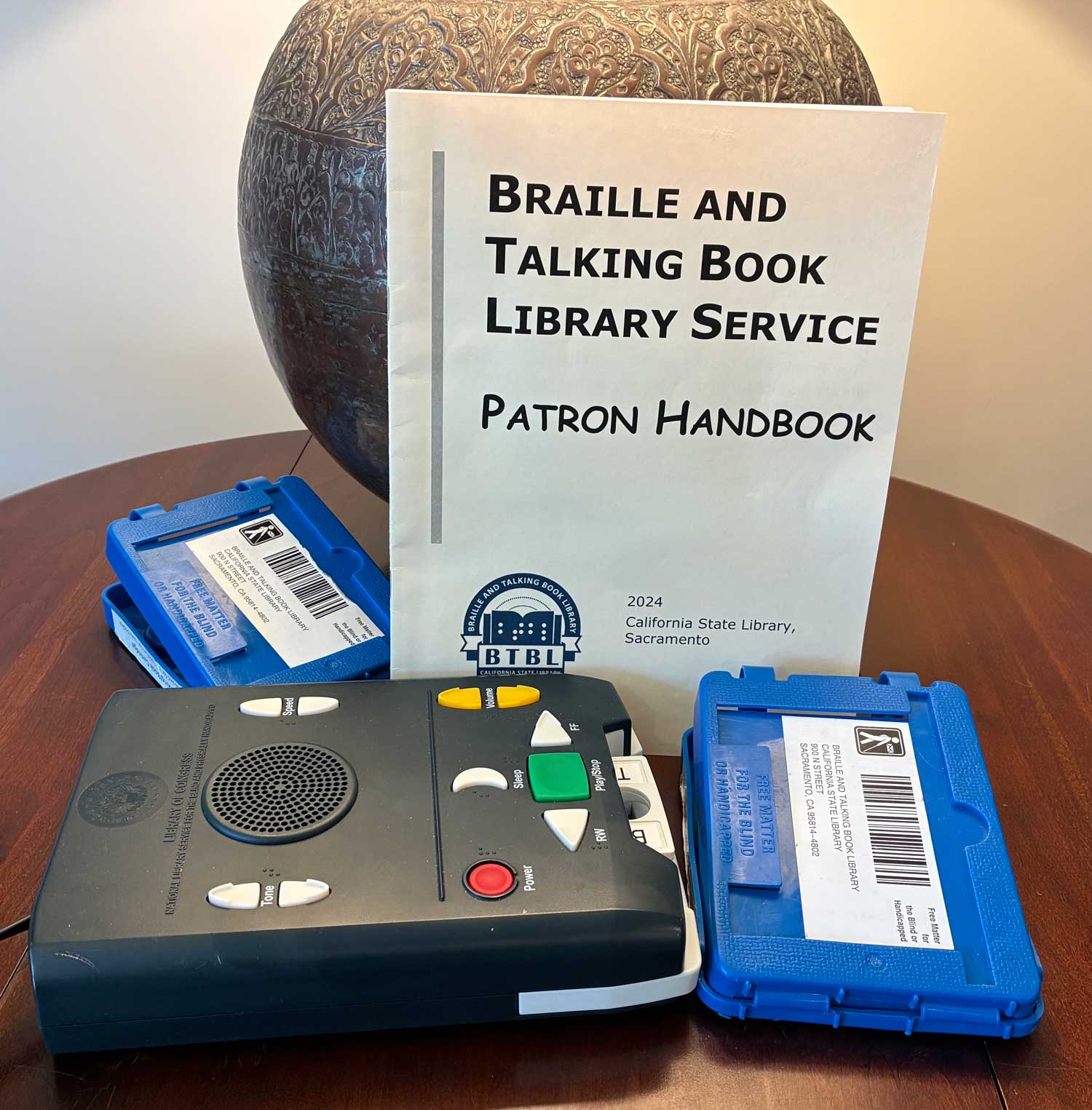 The system’s mechanical components all functioned smoothly. The Digital Book machine and cartridges all arrived promptly and safely and were easy to use. A 2×3” plastic cartridge containing one or more books slipped easily into the machine, like a cassette into a tape-recorder. The 5×8” machine, contained an audible, comprehensive user guide, with most information duplicated and illustrated in an accompanying printed Patron Handbook – twin, lucid Operating Manuals. Machine button labels and Handbook pages were all in large print. The cartridges’ mailing containers were easy to seal and moved back and forth, free-of-charge, through the U.S. Postal System (although, admittedly, with some delayed delivery.) The machine’s sound quality was excellent. Although I had no early occasion to make use of this feature, it had 15 hours of battery power when not plugged in.
To test my listening enthusiasm, I selected a sample batch of five diverse titles: Arthur C. Clarke’s Childhood’s End and Tolstoy’s Anna Karenina, icons I’d never gotten around to reading; Kaycee Lee Dugard’s acclaimed abduction memoir, A Stolen Life; A Cold Dish, the first volume in Craig Johnson’s Sheriff-Longmire series; and Amy Chua’s San Francisco Bay Area noir, Golden Gate. All recordings came with informative Readers’ Notes that were much more substantial than typical print-editions’ author blurbs.
The listening experience was particularly satisfying. The professional narrators were impressively skillful. (Chua’s handled 11 voices: male and female, American and foreign, adults’ and children’s.) Audio performances were especially effective for making book characters’ dialogue pop. To my surprise, I found I slipped into a state of intense alertness (almost like meditation), eyes closed but never dozing; absorbed and attuned.
My sample selections’ running times ranged from eight to 38 hours. The latter, Anna Karenina, put it beyond the bounds of my intended reading experiment. This was my sole disappointment. I found this novel brilliant in writing, characterization, relationships and dialogue. Much more moving and accessible than academic commentaries had led me to anticipate. Even so, with detailed Readers’ Notes and four hours of dipping in, I gained a deep appreciation for this masterwork.
Overall, I spent 50 hours in June listening: one or two daily hours at home, often twice that on vacation. Doing the math, I guessed that, if I could sustain this dedication, I could read 50-60 audio books in a full listening year.
Tune in next month to see how I’m selecting an exhilarating collection for reading with my ears.